Background
Recorded recipes for Polish Potato Hoof’s or Kopytka in Polish, can be found dating back to the 18th century. Kopytka began growing in popularity initially in the Masuria District (North-Eastern Region) of Poland, where its still a strong backbone of many of the regional dishes today. It wasn’t long before the recipe overtook the country, given its simple, easy and goes well with basically any dish.
Originally considered Peasant food. Polish Potato Hoof’s (Kopytka) is thought to have been a Polish alternative or adaptation, to Italian gnocchi. It not only regarded as a filling dish but it played a vital role in managing excess amounts of Potatoes and flour before they expired between seasons.
Today, although they are no longer shaped like horse hoof’s. Kopytka still have a central presences in Polish Cuisine, even in high end restaurants. Being a great alternative side for Gulasz, or a filling base to bulk up Leczo on a cold night.
Ingredients for Polish Potato Hoof’s
| – 1.5kg (3.3lbs) of all purpose potatoes. – Around 255g (9 oz) of flour – 2 Small eggs – 1 Teaspoons of Salt & Pepper – 1 Tablespoon of cooking oil |
Preparation for Polish Potato Hoof’s
- Wash & Peel the Potatoes.
- Crack & beat the eggs in a cup or small bowl.
Method
Boil & Mash
After Peeling, I recommend cutting the potatoes into thin slices around 1.5cm (1/2 inch) thick. This will allow them to cook much quicker for mashing. Pre-heat a large pot with salted water and boil the potatoes until they can easily be pierced with a fork.
Once they’re ready, drain the water from the pot and ensure no water remains with them. Once they’ve had time to cool slightly, using a masher or food processor. Mash the potatoes until they are smooth. Try not to let any lumps remain as this will affect the end result.
Season & Knead
When the Potatoes are safe to handle, transfer the mash to a large mixing bowl. Before adding, 1 Teaspoon of Salt & Pepper, 200g (7 oz) of sifted flour and the 2 small eggs. Using a spatula initially, gentle combine the ingredients for a minute or two. Until you feel its ready to mix by hand.
Place the remaining flour in a small bowl and sprinkle the counter top generously to prevent sticking. Transfer the mixture to the countertop and roll, fold and knead the mixture until its thoroughly combined.
Once the mixture is combined enough to hold its own structure, roll it into a thick log type shape and cut into four even pieces. Set three of the pieces to one side and begin rolling the first piece into a long rope shape, ideally no more than 2cm (3/4 inch) thick. Sprinkle as much flour as you feel necessary to aid the process.
Using a sharp knife, cut pieces in an angle around 2.5cm (1 inch) apart which should give little rhombus like shapes . The most important thing is to keep the cuts as even as possible to ensure they cook at the same pace. Continue repeating the process until all the Potato dough has been used.
Time to Cook
Using a large pot, fill it half way with water and bring to the boil. When the water is boiling, add around a teaspoon of Salt and reduce the heat slightly until the water surface has calmed to a gentle simmer. Before adding the adding the 1 Tablespoon of oil to the water (this will reduce sticking).
Carefully add a handful of dumping’s at a time. You can add more if you have the space but be sure not to overcrowd the pot, as they will stick together. If they stick to the bottom when you drop them in, you can very gently stir the water and this should loosen them.
You’ll know they’re almost fully cooked when they rise to the surface of the water. Usually this takes around 2 minutes if the sizing above has been followed. Once they rise to the surface, I recommend allow them to float there for another 30 seconds to ensure the are cooked all the way through.
Continue in batches until all the dumping’s have been cooked.
Serving
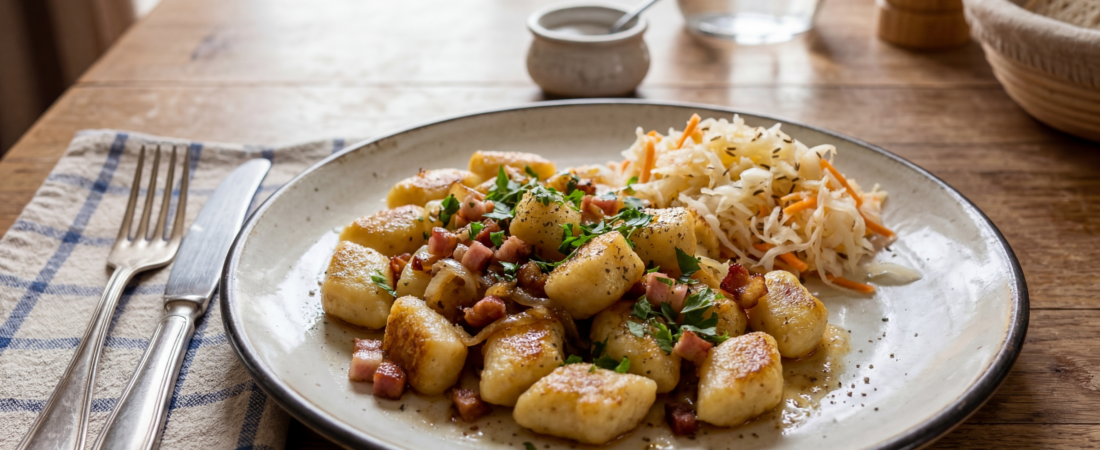
Polish Potato Hoof’s (Kopytka) is traditionally served as a side dish as an alternative to regular potatoes, rice or pasta. However, its occasional for Kopytka to be served as an independent dish with fried bacon & onions.
Storing Polish Potato Hoof’s
If frozen within an hour of cooking in food safe, airtight freezer bags. Then Kopytka can be frozen up to 3 months. To re-heat, simply boil them in water again for around 5 minutes or until they float.