Background
Many dishes in Poland are Iconic. Undoubtably Gołąbki is in the top 5 of the most Iconic dishes, if not number one. You would have higher chances of winning the lottery than finding someone in Poland who does remember having this comforting dish made by their parents or grandparents.
Variations of this dish can be found all over the Baltics. Its not clear who developed the recipe first, but it seems that the popularity started with royal cooks in the 18th century.
The recipe is super simple. However, in my experience its method can require practice. Most commonly pork mince meat is used for the filling. Some people also traditionally prefer to grind their own pork shoulder for the filling. Personally, I just stick with my local butcher Pork mince meat for simplicity’s sake.
Ingredients for Gołąbki
| – Around 800g (1.7lbs) of Pork mince – 1 Large cabbage Green, white or Chinese – 55g (2oz) of white rice – 500ml (17fl oz) beef or chicken broth – 1 Large onion – 2 Tablespoons of breadcrumbs (optional) – 100ml (3.4fl oz) of heavy cream (optional) – Around 200g (7oz) of Tomato paste – 1 Tablespoon of oil suitable for frying – 1 Teaspoon Salt – 1 Teaspoon Pepper |
Preparation
- Finely dice the onion.
- Prepare 500ml (17fl oz) of broth
- Cook and drain 55g (2oz) of white rice.
Method for Gołąbki
Firstly, I usually heat up the oil in a frying pan and add the diced onion. Fry for around 5 mins on medium heat or until softened. Then do the white rice according the the producers instructions
Once they’re ready, set aside and allow to cool. So you won’t need to worry about burning your hands, during the mixing stage later.
Softening the Cabbage
Fill a large pot around 1/3 of its capacity with water and bring to the boil. While your waiting for the water, start preparing the cabbage. If your cabbage has large central core at the bottom. Take a sharp knife and carefully cut a inverted cone like shape around the core to remove it. Be sure not to cut too deep as you want the leaves closer to the top to remain intact. I usually cut around half way in, but it depends on the cabbage type.
Once the water has came to the boil, reduce the heat to low (gentle simmer). Then put the cabbage in hole/bottom down for 10 minutes. Afterward turn upside down and begin cooking the top for another 10 minutes on the same low heat.
If you only have Chinese cabbage or any other type. It may be more simple to remove the leaves before placing them in hot water. The important thing is you have intact leaves to use for wrapping the filling. Once your Cabbage has been softened begin gently removing the leaves and placing them to the side.
Mix, Fold & Roll
In a large bowl add the softened onion, cooked white rice, breadcrumbs, pork mince, 1 teaspoon of salt and pepper. Mix thoroughly until well combined and easily shaped.
Now empty the water out of the pot used to soften the cabbage. Then layer a few of the smallest or torn cabbage leaves on the bottom. Creating a bed for the rolls to sit on top, this will prevent any burning or splitting of the rolls.
Next lay out your cabbage leaves and begin rolling up the meat/filling to make rolls. I advise flattening the filling slightly and placing at the bottom of the leaf (where it connected to the root). Fold the sides of the leaf inward to cover the top of the filling. Then roll toward the top of the leaf. After you should have a reasonably tight roll of which to place in the cooking pot. Remember to place it in the leaf bed with the flap side down.
Continue until all the filling has been used. If its your first time, don’t be afraid to open the leaf parcel up again if you use too much. The practice will serve you for years to come.
Stacking
Once all the rolls have been made begin stacking them (Flap down) on top of each other in the pot. Important note: on occasion the rolls may try to float during cooking. To avoid this, I suggest stacking the rolls on top of each other before adding the broth. Ensure the pot your using is small enough for at least two layers tightly packed rolls. As if the pot is too wide they may open during cooking. If you can only manage one layer in the pot used for cabbage. Then swap it for a smaller pot, remembering to transfer the leaf bed as well.
As you should now have a nicely packed pot of Gołąbki, next add the previously prepared broth. The broth should fill the pot enough that all the rolls at the bottom are submerged fully. The rolls at the top normally cannot be fully covered more than half way by the stock. As they tend to start floating in my experience. For this reason ensure you add the stock VERY slowly. If you not the rolls may float and open before cooking has begun. As long as the top rolls are at least 1/3 of the way covered by the stock they should cook. As long as a lid is placed on the pot during cooking as the steam will help do the rest.
Cooking
Cover the pot with a lid and cook on low power (very gentle simmer) for 90 minutes. It’s important steam is created by the cooking, but not enough that the lid will need removed or tilted. Be sure to NOT stir the pot while cooking, as this will cause the Gołąbki to open.
After the 90 mins I recommend taking a roll from the top of the pot and cutting in half. Making sure its fully cooked. If not then check the heat in the pot is sufficient and continue for another 30mins, then check again. Don’t worry we can still use these rolls later once the sauce is ready.
Once the rolls have finished, next comes the sauce. For this part I recommend extracting the stock used for your rolls. Grab a large spoon or Ladle and tilt the pot slightly to once side. Extract as much stock as possible into a separate small pot.
Put the small pot on a low heat and stir in the tomato paste, salt and pepper. Once thoroughly mixed, begin adding your heavy cream gradually. You should now have a gravy like consistency in the sauce. Be sure to taste test and add more seasoning if needed. You can also some paprika or all spice if you like.
Serving
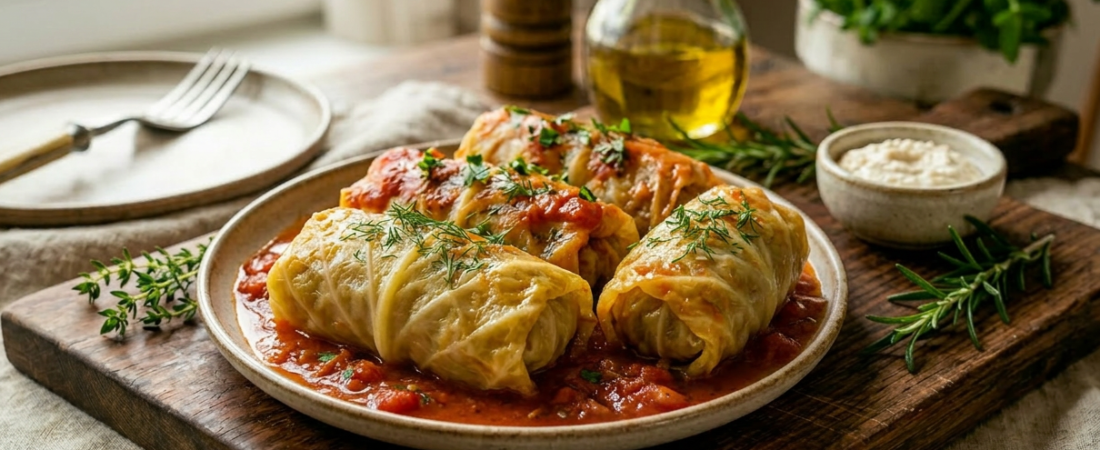
Once ready, place the rolls on a plate with elevated edges or wide soup bowls. Then pour the sauce over the top. I always use a little parsley on the top for decoration, if you have it handy.
Storage
I don’t recommend storing Gołąbki for more than two days in the refrigerator. Be sure to use an airtight, food safe container.