Background
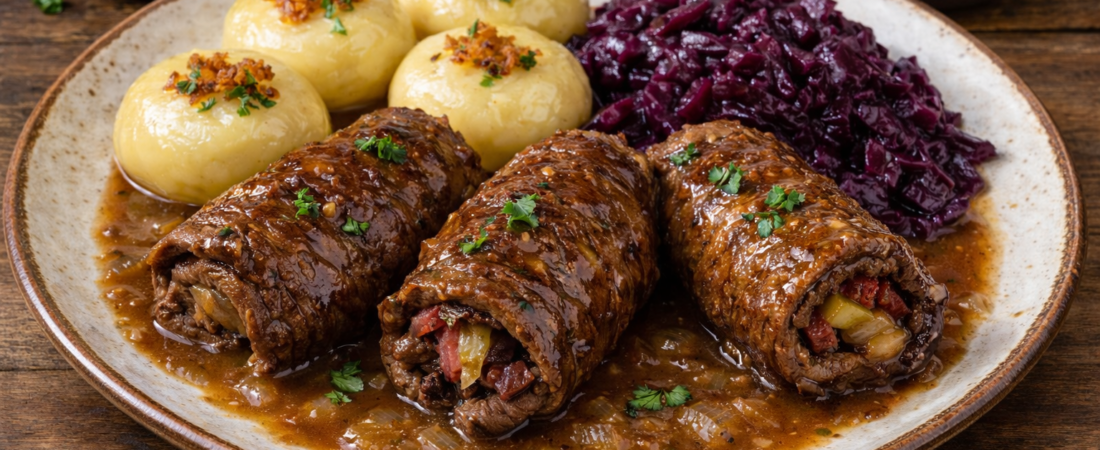
Polish Beef Roulades are known by all poles for being a key traditional dish of the Silesian (Śląskie) region in the southern part of Poland. So traditional in fact, you will find they are widely popular in even the most prestigious restaurant menus across the country.
One of the things I truly adore about living in Poland is discovering each State/Region (referred to as Voivodeships by Poles). Has its own set of traditional dishes. Not only are they handed down from child to grandchild. But the dishes themselves hold a nationwide recognition and respect of the unique heritage of each State/Region.
Needing only a few simple ingredients, these roulades with a bit of practice. Can become a great alternative to a traditional Sunday roast or something special to make guests feel appreciated.
The key to this recipe is getting the meat right. Traditionally in the home, thin cut frying steaks are used. However due to the slow cooking method, any lean cut which is sliced into thin steaks will work.
Ingredients for Polish Beef Roulades
| – Around 700g (1.5lbs) of thin beef cuts (around 8 small steaks) – 200g (7oz) of smoked raw bacon – 1 large onion – 3 cloves of garlic – 750ml (25fl oz) of beef stock – 2 tablespoons of your preferred mustard – 2 medium sized pickles (whole) – 1 teaspoon of paprika – 1/2 teaspoon of salt and pepper – 1 large bay leaf – Cocktail sticks, skewers or cooking string. |
Preparation
- Gently tenderise/flatten the beef with a meat hammer.
- Finely chop the onion
- Prepare 750ml (25fl oz) of beef stock
Method for Polish Beef Roulades
Making the roulades
Take your tenderised meat cuts and lay them out, before even spreading your mustard over the top of each cut. If your using a particularly thick or chunky mustard, feel free to add more as necessary to get a nice fine layer on all the steaks.
Next take the bacon and lay it on top of the mustard, ensuring it doesn’t hangover the edges of the beef. If your bacon is thin enough you can double it over in some places to avoid this. If your bacon is a bit thicker and doesn’t fold well, i recommend carefully trimming the bacon with a knife and re-use the leftovers in other beef cuts.
Now you should have all beef cuts covered in the mustard and bacon, its time to add the pickle. Using whole pickles, cut lengthwise in half and then in half again to give 4 long quarters. Place the quarter at the edge of the beef cut and begin to roll the steak over the top until you have a roulade. Then place as many cocktail sticks as necessary to hold the beef flap in place. Repeat this until all the cuts have been completed. If you only have burger style pickles, the process is the same only placing them side by side at the edge of the meat.
Cooking the Roulades
Using a large frying pan, heat up some a little cooking oil or lard and fry the roulades on two sides (where cocktail sticks allow). Fry until you can see a desirable level of browning before transferring to a cooking pot. Leave the juices in the pan for the onion later.
The cooking pot I use is 25cm wide by 12cm high (10×5 inches). I don’t recommend using anything bigger than this, as the stock my not cover the roulades enough. As a workaround if you don’t have anything smaller, you can add more stock as necessary or use a large frying pan that has high walls and a lid.
While the Roulades are in the pot, using a ladle, large spoon or a heat safe jug. Carefully add your warm stock to the pot until the water level comes close to the top of the roulades. Be careful not to pour the stock in too quickly as this may cause the roulades to float and release the bacon or pickles. Once the roulades are almost covered, bring the pot to boil slowly. After the stock starts boiling, reduce the heat until you reach a very gentle simmer. Add the bay leaf and cover the pot with a lid before cooking on that gentle simmer for around 90-120 minutes.
After around 90 minutes, check the roulades to ensure no pink remains on the top of them. If so re-arrange as necessary to ensure the stock can cook the meat evenly. Add a flat teaspoon of paprika and continue cooking on a gentle simmer for another 30 minutes.
Making the sauce
Once the 120 minutes is up, its time to thicken up the stock. There are two main methods for this, in Polish home cooking its common to add a flat tablespoon of plain flour (alternatively Potato or Corn starch) to lukewarm water and add to the cooking pot, stirring thoroughly after. Personally I never have much luck with this method and find making a Velouté sauce (a roux mix with the beef stock used for cooking the roulades) gives a much more desirable effect. If you are new to Roux based sauces or Velouté then you can find a simple guide Here
Now the sauce is finished your roulades are ready to serve. I recommend serving immediately. However, if you can’t serve them immediately. Be sure to keep them in the sauce otherwise they will dry out quickly.
Traditionally they are served with Silesian dumplings. However they go great with mashed and roast potatoes as well.
Serving
Rolada Śląska is traditionally served with Silesian dumplings. Alternatively it goes well with mashed or roasted potatoes.
Storing Polish Beef Roulades
Storage is limited for roulades as ideally they need to stay in their sauce. Otherwise they will dry out very quickly and won’t reheat well. However, if refrigerated in their sauce within an hour of cooking, in a airtight food safe container. Then 1-2 days should be possible.