Background
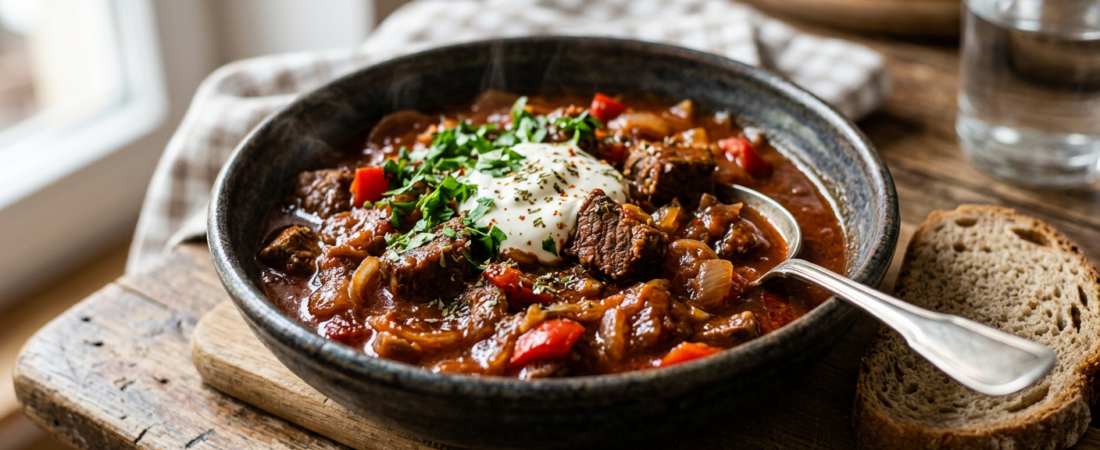
Polish Gulasz (Polish Beef Stew) is one of the most iconic Polish dishes. Out of all the restaurants I’ve experienced in Poland its the one dish that seems to hold its unique character no matter where you go. Traditionally served with potato pancakes (Placki ziemniaczane) and large dollop of sour cream, this comforting stew is perfect for the cold winter nights.
This recipe is best made with Beef. If you prefer to use Pork, then you can find the method for the that variant of Gulasz Here.
Ingredients
| – Around 1 kg of beef leg, shoulder or stewing steak – 1 large red pepper – 2 Medium onions – 2 Large carrots – 4 cloves of garlic – 3 tablespoons (40g) of all-purpose flour – 4 tablespoons Lard (or cooking oil) – 2 cups of water – 500 ml – 1 teaspoon of salt – 1 teaspoon of sweet paprika – 1/2 teaspoon of cayenne pepper – 1/2 teaspoon of pepper – 2 bay leaves |
Preparation for Polish Beef Stew
- Slice the Beef in to bite sized chunks around 2cm x 2cm, before placing in a large bowl.
- Peel and cut the onions finely
- Wash, peel and chop the carrots in small quarter size pieces
- Wash and dice the peppers
Method for Polish Beef Stew
Dredge it & Brown it
Using a plate or a bowl. Dredge the chunks of beef in the 3 tablespoons of all purpose flour, aiming for a light coating. Its ok if you use a little more or less flour as it can depend on the beef and flour quality.
On a high heat setting, warm up 2-3 tablespoons of Lard (or cooking oil) in a frying pan. Once the Lard or oil is hot, add the beef chunks in batches to the pan (be careful to line the pan surface evenly without overcrowding) and brown the chucks on all sides. Once a batch is done, transfer to a large cooking pot, before adding the next batch. Be sure to keep any juices in the pan to use for the vegetables later.
Begin the Stewing
After all batches have been transferred to the large cooking pot. Pour in 500ml of water (or beef stock if you prefer a deeper meat flavour) and add 1 teaspoon of salt, 1 teaspoon of paprika, 1/2 teaspoon of cayenne pepper, 1/2 teaspoon of pepper and 2 bay leaves. Stir the contents of the pot well, before setting on Medium-low heat to begin stewing the meat.
While the Beef is stewing, warm up the frying pan used for browning the beef to medium heat and add the chopped onions. After the onions have had time to soften (7-10 mins). Add the garlic (crushed or finely chopped) to the pan and cook for a further 1-2 minutes, stirring regularly.
Once the onions are ready, transfer the entire contents of the pan (including any remaining juices) to the stewing beef. Before also adding the carrots and peppers. Continue stewing the pot (covered with a lid) for a further hour, ensuring to mix every now and then to ensure the beef cooks thoroughly. If the water level becomes too low feel free to add a little more as needed.
Check & Thicken
After an hour has passed, check if the meat has softened enough and is thoroughly cooked. If so then begin taste testing and adjust to your preferences by adding more salt, pepper and spices. You can also add a little red wine at this stage if you like.
Lastly, to thicken the stew. Using a small bowl, add 50ml of lukewarm water and add one tablespoon of wheat flour. Mix until the water is smooth with no lumps and pour into the stew pot. Stir the pot on low heat thoroughly for a few minutes, until the sauce thickens. Then turn off the heat. If you feel the stew could still be a bit thicker, feel free to add some tomato paste and mix again before serving.
Serving
Gulasz is traditionally served with Potato pancakes. That being said, it goes well with Potatoes of all types. I have put a few other options in the table below.
| Traditional Polish side choices – Potato Pancakes (Placki ziemniaczane) – Boiled Buckwheat Groats (Kasza Gryczana) – Bread | International side choices – Potatoes (Mashed or roasted) – Rice – French Fries or Wedges |
Storage
Storage of Gulasz like many foods will depend on several factors. However, If placed in an airtight container and refrigerated within an hour of cooking. Then 3 days should be possible for safe storage.